






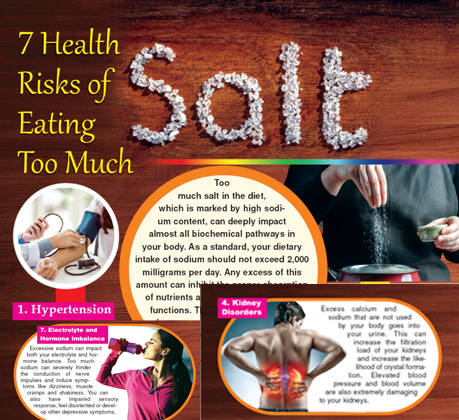

Too much salt in the diet, which is marked by high sodium content, can deeply impact almost all biochemical pathways in your body. As a standard, your dietary intake of sodium should not exceed 2,000 milligrams per day. Any excess of this
amount can inhibit the proper absorption of nutrients and disrupt normal body functions. The following are seven dangerous health consequences of eating too many salty foods.
1. Hypertension
T foods. he number one medical consequence of high salt intake is hypertension. High intake of salt causes water retention and promotes abnormal influx of water molecules into your blood vessels. This action instantaneously increases your
blood volume and blood pressure. Sudden rises of blood pressure can trigger life threatening cardiovascular emergencies like strokes and heart attacks. Reducing your sodium intake through diet can lower your blood pressure by as much as
25%.
2. Abnormal Heart Development
A habit of eating salty food can also heighten your risk of non-blood pressure related heart diseases. Having higher than normal blood volume means that your heart has to work much harder to provide proper circulation. Over time, your heart
can become abnormally large and your heart valves can become thinner. An enlarged heart is significantly weaker and can lead to symptoms like chest pains, breathlessness and chronic fatigue. Fatal cases like sudden cardiac arrest and heart
failure can also occur.
3. Osteoporosis
Sodium inhibits your body’s absorption and utilization of calcium, leading to a loss of bone mass and increased porousness of your bones. Women after menopause, diabetics and elderly people who are already at high risk of osteoporosis
should be especially careful about salt intake. Having a high salt diet can drastically heighten your chances for fractures and other skeletal deformations.
4. Kidney Disorders
Excess calcium and sodium that are not used by your body goes into your urine. This can increase the filtration load of your kidneys and increase the likelihood of crystal formation. Elevated blood pressure and blood volume are also
extremely damaging to your kidneys.
5. Dehydration and Swelling
Feeling thirsty is a direct response after having salty food. This happens because excessive sodium in your blood draws water out of your cells and into your tissues. Dehydrated cells signal your brain for water. Having fluid filled tissue
makes you look bloated and swollen, and these symptoms are especially severe in the lower parts of your body. Reducing your salt intake is an effective way of preventing swollen feet, ankles and calves.
6. Digestive Diseases
Sodium regulates the acidbase balance of blood and body fluids. Too much salt can trigger acid reflux and cause heart burn and long-term damage to your upper digestive tract. Studies have shown that habitual intake of salty foods is a
strong risk factor for duodenal and gastric ulcers and cancers.
7. Electrolyte and Hormone Imbalance
Excessive sodium can impact both your electrolyte and hormone balance. Too much sodium can severely hinder the conduction of nerve impulses and induce symptoms like dizziness, muscle cramps and shakiness. You can also have impaired sensory
response, feel disoriented or develop other depressive symptoms.
Quick Facts on Salt
- Most sodium is consumed in the form of sodium chloride which is table salt. Other forms of sodium are also found in food, so watch out for salt AND sodium.
- Try to have less than 2,300 milligrams of sodium a day – that’s the same as 6 grams of salt a day, or about 1 teaspoon
- That includes ALL sodium and salt – what’s in the product, and added in cooking and at the table
- Processed foods account for most of the sodium and salt consumed
- Check food labels – sodium is in some foods you might not expect, such as soy sauce and some antacids
- Kosher salt and sea salt are just that – salt. Don’t forget to include them in adding up your sodium intake for the day
- Reducing salt in the diet can lower blood pressure





Add Comment