



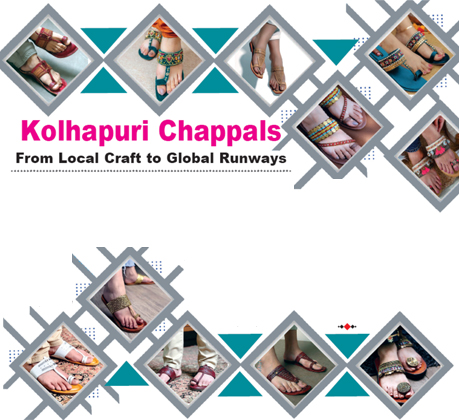

From Local Craft to Global Runways
India’s traditional footwear has long been a symbol of cultural identity and craftsmanship. Among them, Kolhapuri chappals stand out, not just for their aesthetic appeal but for the deep-rooted history they carry. Born in the town of
Kolhapur in Maharashtra, these handcrafted leather sandals have now crossed borders and entered the global fashion conversation. Their recent appearance in international luxury fashion, such as a line of sandals by Prada that bear a
striking resemblance, has once again turned the spotlight on this timeless Indian creation.
The Kolhapuri chappal is more than just a sandal; it is the result of centuries of local skill, community livelihood, and evolving design sensibilities. Traditionally made from locally sourced buffalo leather and tanned using natural
vegetable dyes, the sandals are hand-stitched, often without the use of nails or modern tools. Their durability, comfort, and distinctive appearance, with flat soles, open-toe design, and sometimes intricate braiding or cut patterns, make
them uniquely Indian and seasonally perfect for the country’s hot climate.
The origin of these chappals can be traced back to the 13th century, during the reign of the Chhatrapati kings. Initially popular among the rural communities of Maharashtra and Karnataka, they were later refined by local artisans who began
adding artistic flourishes, creating region-specific variants such as the Kapashi, Kachkadi, and Bakkalnali. The craft was especially sustained by the Chambhar community, whose traditional knowledge of leatherwork has been passed down
generations.
Over the years, the Kolhapuri chappal has found its place in both casual and semi-formal wardrobes, symbolizing a blend of tradition and contemporary style. In recent decades, they’ve enjoyed popularity not only in Indian fashion circuits
but also among international tourists, design enthusiasts, and slow fashion advocates.
The global spotlight intensified when high-end fashion labels showcased footwear bearing unmistakable similarities to Kolhapuris. While not always credited directly, many of these designs drew inspiration from the original craftsmanship,
with adaptations in material or embellishment. When a brand like Prada markets such a sandal as a luxury item, it underscores not only the enduring appeal of Indian design but also the importance of recognizing indigenous contributions to
global fashion.
As India pushes for GI-tagging and protecting its artisan crafts, the Kolhapuri chappal’s journey, from the dusty lanes of Maharashtra to the runways of Milan, is a proud reminder of how local stories can find global resonance when rooted
in authenticity.





Add Comment