



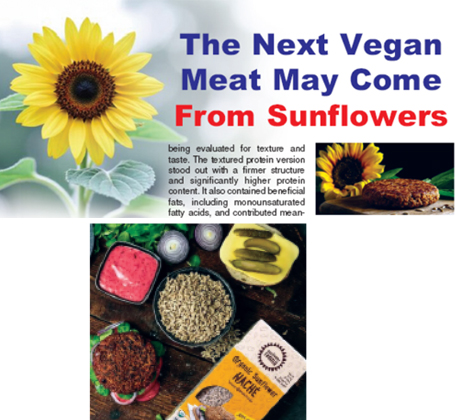

Sunflowers may soon play a larger role in plant-based diets. A team of researchers in Brazil and Germany has developed a protein-rich meat alternative made from refined sunflower flour, offering a mild flavor and impressive nutritional profile. The ingredient comes from sunflower seeds after the oil has been extracted, a process that typically leaves behind a byproduct used mostly for animal feed. By removing the husks and certain compounds that affect taste and nutrient absorption, the researchers transformed the flour into a foodgrade material suitable for human consumption.
The research involved scientists at the Institute of Food Technology and the University of Campinas in Brazil, working alongside the Fraunhofer IVV Institute in Germany. They created two prototype versions of a meat-like product. One was made using flour from roasted sunflower seeds, while the other used textured sunflower protein. Both were seasoned with tomato powder, spices, and oils from sunflower, olive, and linseed to enhance flavor and improve nutritional balance.
The mixtures were shaped into burger patties and baked before being evaluated for texture and taste. The textured protein version stood out with a firmer structure and significantly higher protein content. It also contained beneficial fats, including monounsaturated fatty acids, and contributed meaningful levels of important minerals, supplying nearly half the recommended daily intake of iron and even greater proportions of zinc, magnesium, and manganese.
Because sunflower oil production is already widespread, especially in Europe and increasingly in Brazil, the researchers point to sunflower flour as a sustainable protein source that fits within existing agricultural systems. The ingredient is also naturally non-GMO, which may appeal to consumers who prioritize clean-label or minimally processed foods. The mild taste of the refined flour gives it an advantage over some other plant proteins that can have strong, distinctive flavors, making it easier to incorporate into recipes without masking agents or heavy seasoning.
The development aligns with growing global interest in plant-based foods that can offer environmental benefits and meet nutritional needs. The researchers note that achieving a fibrous, meat-like texture remains crucial for wider acceptance, and processing techniques such as extrusion can help create that structure. As plantbased options continue to expand, products that deliver both nutrition and familiarity are more likely to succeed with consumers who are open to reducing meat but prefer foods that resemble traditional meals.
Beyond its food technology potential, the project highlights how collaboration between research groups can foster innovation and deepen understanding of how familiar crops can be used in new ways.
The team also hopes that further advances will make sunflower protein more affordable to produce on a commercial scale, opening the door to its use not only in burgers, but in sausages, nuggets, and ready-to-cook meals. The researchers hope their findings will encourage greater use of sunflower- based ingredients, expanding both agricultural value and consumer choices in the plant-based food market.





Add Comment