







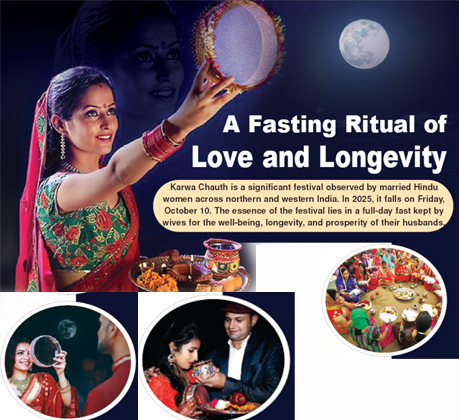

Karwa Chauth is a significant festival observed by married Hindu women across northern and western India. In 2025, it falls on Friday, October 10. The essence of the festival lies in a full-day fast kept by wives for the well-being,
longevity, and prosperity of their husbands.
The word “Karwa” refers to an earthen pot, and “Chauth” means the fourth day. It is celebrated on the fourth day of the waning moon in the month of Kartik. Traditionally, the ritual originated among Rajput women, but over time, it became
popular across various communities in India. The day is not just about abstaining from food and water; it is a spiritual vow of love, strength, and commitment.
Women wake up before sunrise to eat a pre-dawn meal sent by their mothers-in-law. After that, they begin a rigorous fast that continues until they sight the moon at night. Throughout the day, women dress in festive attire, often in shades
of red, maroon, or pink-and adorn themselves with jewellery and henna. During the evening, women gather in groups and perform a collective puja. They worship Lord Shiva, Goddess Parvati, and Lord Kartikeya, and listen to the Karwa Chauth
story, which narrates tales of devotion and sacrifice. An earthen pot (karwa), filled with water, plays a central role in the rituals. Hymns and prayers are recited, and offerings are made in hopes of divine blessings.
The climax of the ritual occurs after moonrise. Women view the moon through a sieve or dupatta and then look at their husband through the same. They offer water to the moon and complete the fast by receiving the first sip of water and bite
of food from their husband.
While deeply personal, the festival also emphasizes community, sisterhood, and shared faith. In modern times, even some men have begun fasting in solidarity with their wives, adding new layers of meaning to the tradition.
Karwa Chauth is more than a ritual, it is a celebration of love, endurance, and prayer. It represents not just the bond between partners, but also the enduring power of belief, tradition, and mutual care in a marriage.



Add Comment