



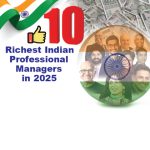



Dr. Sumul Raval’s vision for Patients and Community
At this year’s Gujarati Physicians Convention in Atlanta, the energy in the air goes far beyond medical lectures or networking sessions. It’s about community, legacy, and the future. Among the dedicated leaders making this gathering
possible stands Dr. Sumul Raval — a pioneering neuro-oncologist, committed community builder, and tireless advocate for the next generation of Gujarati doctors in America. Originally from Gujarat’s Jamnagar, Dr. Raval’s journey is shaped by
both quiet determination and bold ambition. He completed his medical degree at M.P. Shah Medical College in Jamnagar in 1990 before setting his sights on the United States — a leap that would eventually benefit thousands of patients and
inspire countless young physicians.
His first stop in America was a post-doctoral fellowship in neuro-immunology. Within just six months, Dr. Raval’s research broke new ground in the study of multiple sclerosis. His findings on apoptosis — the body’s process of programmed
cell death — opened new doors for research on this debilitating disease. While the ultimate cure for MS remains elusive, his early discoveries sparked hope and fresh directions for scientists worldwide.
Not content to stop at research, Dr. Raval went on to complete his neurology residency at UMDNJ in Newark, where he served as chief resident, before undertaking a highly specialized fellowship in neuro-oncology at the renowned Memorial
Sloan Kettering Cancer Center. He became the first neuro-oncologist from Gujarat — a trailblazer beginning new chapters for many to follow. But instead of building a career solely within the walls of elite institutions, Dr. Raval chose to
bring world-class care closer to ordinary families. In 2003, he established the first dedicated brain tumor center in New Jersey, and across the world— a place where patients could receive cutting-edge treatment without having to travel
across states.
Today, he stands as one of the region’s leading voices on neuro-oncology, known for his expertise in complex brain tumors like glioblastoma. Remarkably, he has never charged a single patient in India over the last three and a half decades.
Yet when asked about his legacy, Dr. Raval doesn’t start with breakthroughs or accolades. Instead, he talks about building bridges — not just between lab research and patient care but between generations, cultures, and continents. That’s
why he’s at the heart of this year’s Gujarati Physicians Convention as a cochair, helping gather more than 2,000 physicians of Gujarati origin under one roof. For Dr. Raval, this isn’t just a professional meet-up; it’s a family reunion with
a mission. “Education is always key,” he says. “But what matters just as much is unity. We want this convention to bring people together, share knowledge, and strengthen our community, whether they came from Baroda, Jamnagar, Ahmedabad, or
are born here in the US.”
His passion doesn’t stop with the first generation. One of Dr. Raval’s biggest dreams is to inspire young Gujarati-American doctors, second and third generations, to step up as leaders. He credits senior figures like Dr. Naresh Parikh, whom
he calls a “godfather for Gujarati physicians,” for building the strong foundation they have today. Now, he wants to see new leaders carry that torch forward.
But for all his warmth, Dr. Raval is equally sharp about the challenges today’s doctors face. As vice president of the Medical Society of New Jersey, a body representing 36,000 physicians, he has already made real change happen. He helped
push forward a landmark pre-authorization law: if an insurance company doesn’t approve a doctor’s prescription within 48 hours, it’s automatically approved. It’s a small shift with huge impact, freeing physicians from hours of needless
paperwork and ensuring patients get timely care.
Dr. Raval wants to see that model expanded nationwide. In his eyes, advocacy is just as critical as clinical excellence. “If you’re not at the table, you’re on the menu,” he says, urging his peers to vote, organize, and speak up. From
tackling endless insurance denials to the burden of medical malpractice costs, he knows that the future of independent practice in America depends on proactive, united action — and he’s ready to lead that fight all the way from Trenton to
Washington, D.C.
Above all, Dr. Raval sees his work as service, a value deeply rooted in his upbringing. He remembers the early excitement of his MS research not for personal glory but for its promise to help people. That same spirit guides him today as he
calls on his community to rise, unite, and lift each other higher. As the final sessions wrap up at this year’s Gujarati Convention, Dr. Raval’s message echoes in the halls: It’s not enough to heal patients one by one. True leadership means
shaping a world where every physician has the power to care without barriers, and where every young doctor knows they stand on the shoulders of those who came before them, ready to build something greater still.




Add Comment