



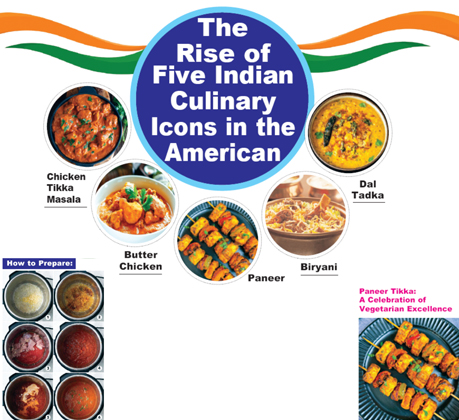

India’s rich and diverse culinary landscape has long been a source of fascination and delight. Yet, in the bustling kitchens of a new generation and the menus of restaurants spanning continents, five dishes have emerged as true ambassadors
of Indian cuisine. These aren’t just meals; they are cultural touchstones, each with a unique story and an irresistible appeal that has captivated palates from London to Los Angeles. For a modern audience seeking authenticity and history in
their dining, these dishes offer a perfect entry point into the heart of India’s flavors. Chicken Tikka Masala, finds its roots firmly in the tandoori traditions of Punjab, evolving from a simple grilled appetizer into a saucy sensation in
Indian restaurants. Similarly, Butter Chicken, or Murgh Makhani, is a product of resilience and innovation, born from a chef’s desire to reinvent leftovers in the tumultuous wake of the 1947 partition. These meat dishes are complemented by
the vegetarian masterpiece Paneer Tikka, which showcases the versatility of Indian vegetarian cooking, transforming humble cottage cheese into a smoky, flavorful delight. For those seeking a deeper dive, the grandeur of Biryani offers a
journey through the royal kitchens of the Mughals, a layered and aromatic feast that has adapted to every corner of the country. Finally, Dal Tadka, the ultimate comfort food, reminds us that the heart of Indian cuisine lies in its
simplicity and the ancient art of tempering, which elevates a humble lentil soup into a dish of profound flavor and warmth.
Together, these five dishes form a perfect entryway into the diverse and enchanting world of Indian food, a world where every bite tells a story. They are a celebration of India’s culinary genius, a collection of recipes that have not only
traveled the globe but have also helped shape the modern culinary landscape.
Chicken Tikka Masala: From Delhi to Global Recognition
While popular lore often attributes Chicken Tikka Masala’s creation to a British chef in Glasgow, Scotland, the story of its Indian roots is far more nuanced and deeply embedded in the culinary traditions of the subcontinent. The dish’s
evolution begins not with a creamy sauce, but with the tandoor. Tandoori chicken, a dish of marinated chicken roasted in a clay oven, is a staple of Punjabi cuisine. The key to its flavor lies in the fiery heat of the tandoor, which gives
the meat a distinct smoky char. It was this foundation that inspired the creation of the masala gravy. In India, particularly in the bustling street food scenes of cities like Delhi, chefs began experimenting with serving tandoori chicken
in a sauce to cater to diverse palates. The concept of “Chicken Tikka,” small pieces of chicken cooked on skewers, was already a popular appetizer. It was a natural next step to create a saucy version, making it more of a main course and
perfect for pairing with rice or naan.
This gravy, a rich blend of tomato puree, cream, and a fragrant medley of spices like cumin, coriander, and garam masala, was a brilliant innovation. It was a dish that took the smoky depth of the tandoor and wrapped it in a comforting,
spiced blanket. This Indian iteration of Chicken Tikka Masala, often richer and spicier than its Western counterpart, became a beloved fixture in restaurants across the country. It was the perfect dish to represent the vibrant and adaptable
nature of Indian cuisine, a dish that celebrated both the traditional tandoor and a modern sensibility for flavor. Its journey to becoming a global icon was simply a reflection of this inherent adaptability, a delicious testament to India’s
culinary genius.
How to Prepare:
To make an authentic Indianstyle Chicken Tikka Masala, start by marinating boneless chicken pieces. In a bowl, combine thick yogurt, ginger-garlic paste, red chili powder, turmeric, garam masala, and a pinch of salt. Mix well and let the
chicken marinate for at least 4-6 hours. For the sauce, heat ghee in a pan and sauté finely chopped onions until golden brown. Add ginger-garlic paste and cook until fragrant. Stir in tomato puree, red chili powder, turmeric, and coriander
powder. Cook this masala until the oil separates. Now, add roasted cashews and almonds, and blend the mixture until you have a smooth, creamy paste. Return the paste to the pan, add a little water, and bring to a simmer. Meanwhile, grill
the marinated chicken pieces in a tandoor or on a hot pan until they are charred and cooked through. Add the grilled chicken to the simmering gravy. Finish with a dollop of fresh cream and a sprinkle of kasuri methi (dried fenugreek
leaves). Serve hot with naan or jeera rice.
Butter Chicken : A Post-Partition Innovation
The story of Butter Chicken, or Murgh Makhani, is inextricably linked to the history of India’s partition. In 1947, Kundan Lal Gujral, a Punjabi Hindu, fled Peshawar and found his way to Delhi. With his partners, he founded a new
restaurant, Moti Mahal, in Daryaganj. At the time, tandoori chicken was the star of the show. However, Gujral faced a challenge: keeping the leftover, cooked tandoori chicken from drying out. He came up with an ingenious solution. He
created a rich, spiced tomato and cream gravy, and tossed the pieces of tandoori chicken into it. This not only prevented the chicken from drying but also created a new, flavorful dish. The gravy, known as “makhani” (butter), was a
masterpiece of simplicity and richness. It was a creamy, tomato-based sauce, subtly spiced with ginger, garlic, and garam masala, and enriched with copious amounts of butter and fresh cream. The smoky char of the tandoori chicken married
perfectly with the smooth, tangy, and slightly sweet sauce. The dish was an instant hit. It became a symbol of Delhi’s evolving food scene and a favorite among diplomats and dignitaries, including India’s first Prime Minister, Jawaharlal
Nehru.
Over the years, Butter Chicken became a staple in Indian restaurants, a dish that represented comfort, luxury, and the resilience of a community that rebuilt itself after a tumultuous period. Its popularity spread across India and
eventually to the rest of the world, becoming a cornerstone of Indian cuisine abroad. The dish is a beautiful metaphor for post-partition India, a rich blend of traditional flavors with an innovative spirit, creating something entirely new
and beloved.
For a perfect Murgh Makhani, start with the marinade. In a large bowl, combine yogurt, gingergarlic paste, red chili powder, turmeric, and salt. Add chicken pieces and marinate for at least two hours.
Grill the marinated chicken in a tandoor or on a hot pan until it is half-cooked and has a nice char. For the gravy, melt a generous amount of butter in a large pan. Sauté chopped onions until translucent, then add ginger-garlic paste. Add
tomato puree and cook until the raw smell is gone. Stir in Kashmiri red chili powder, coriander powder, and garam masala. Add blanched, peeled almonds and cashews and cook for a few minutes. Allow the mixture to cool slightly and then blend
it into a smooth paste. Return the paste to the pan, add the half-cooked chicken, and simmer on low heat. Add a dollop of fresh cream, a sprinkle of sugar to balance the tanginess, and a pinch of kasuri methi. Serve hot, garnished with
fresh cream and coriander leaves, with a side of naan or roti.
Paneer Tikka: A Celebration of Vegetarian Excellence Paneer Tikka, at its core, is a perfect example of how traditional Indian cooking techniques can be adapted to celebrate the
country’s vast and vibrant vegetarian heritage. The concept of “tikka,” or small pieces of a protein grilled in a tandoor, has existed for centuries. While the meat versions were popular, it was the ingenuity of chefs who saw the potential
in paneer that truly brought this dish to life. Paneer, a non-melting cheese, is a culinary workhorse in India.
Its ability to absorb flavors makes it the perfect canvas for a bold marinade. The dish’s history is deeply intertwined with the rise of vegetarian restaurants and the tandoori-style of cooking that gained popularity in Northern India.
These establishments, particularly in cities like Delhi and Amritsar, perfected the art of creating vegetarian versions of classic dishes. Paneer Tikka was a star among them. The dish starts with a thick, yogurt-based marinade, infused with
a powerful blend of spices like turmeric, red chili powder, cumin, and the tangy note of amchur (dried mango powder). Cubes of paneer, along with vibrant pieces of bell peppers and onions, are skewered and then roasted in the blistering
heat of the tandoor. The result is a magical transformation: the paneer becomes smoky and slightly charred on the outside while remaining tender and moist on the inside. The vegetables become sweet and softened, adding a delightful contrast
of textures. Paneer Tikka is a testament to the sophistication of Indian vegetarian cuisine-a dish that is hearty, flavorful, and visually stunning, proving that a meatless meal can be just as satisfying and celebrated.
How to Prepare:
To make a delicious Paneer Tikka, begin by preparing the marinade. In a large bowl, whisk together 27 B R I D G E International English Monthly September – 2025 Website: bridgemagazineusa.com thick yogurt, ginger-garlic paste, chickpea
flour (besan), red chili powder, turmeric, garam masala, amchur powder, and salt. Add cubes of paneer, diced onions, and bell peppers. Mix everything gently, ensuring all the pieces are well-coated. Let the mixture marinate in the
refrigerator for at least 3-4 hours. Once marinated, thread the paneer and vegetables onto skewers. If you are using a tandoor, cook the skewers until they are lightly charred and the paneer is tender. Alternatively, you can use an oven or
a hot grill pan. Brush the skewers with a little oil or ghee while cooking to prevent them from drying out. Cook until the paneer is golden brown and the edges are slightly blackened. Once cooked, sprinkle the Paneer Tikka with chaat masala
and a squeeze of lemon juice. Serve hot with mint-coriander chutney and onion rings.
Biryani: The Royal Legacy and Diverse Flavors of India
Biryani is more than just a rice dish; it’s a testament to India’s rich history, a fusion of Persian, Mughal, and local Indian culinary traditions. The dish’s origins are often traced back to the Mughal Empire, where it was a staple of
royal kitchens. The word “biryani” itself is believed to come from the Persian “birian,” meaning “fried before cooking,” and “birinj,” meaning rice. The Mughals brought with them the art of slowcooking, or “dum pukht,” a technique that is
central to biryani. This method involves sealing a pot and cooking the contents over a low flame, allowing the flavors to meld and the rice to absorb the fragrant steam. As the Mughals expanded their empire, biryani traveled with them,
adapting to the local ingredients and palates of different regions. In Hyderabad, for example, the Nizams developed the famous Hyderabadi Biryani, a “kacche gosht ki biryani,” where the marinated raw meat and rice are layered and cooked
together. The result is a dish of unparalleled aroma and depth, with each grain of rice infused with the flavors of saffron, rose water, and a complex blend of spices. In Lucknow, the “Awadhi biryani” is known for its subtle flavors, with
meat and rice cooked separately before being layered and slow-cooked to perfection. This version is more delicate and fragrant. The journey of biryani across India is a culinary map, with each region adding its unique twist-from the spicy
Malabar biryani of Kerala to the fragrant Kolkata biryani with its signature boiled potatoes. Biryani is a dish that celebrates India’s incredible diversity, a symbol of feasts, festivals, and family gatherings, a single pot that holds the
history of an entire subcontinent.
How to Prepare:
To make an authentic Hyderabadi Biryani, begin by marinating the meat. In a large pot, combine meat (chicken or mutton) with thick yogurt, ginger-garlic paste, red chili powder, turmeric, garam masala, mint leaves, and coriander leaves. Add
fried onions, lemon juice, and a generous amount of oil. Mix well and let it marinate for at least 6-8 hours. For the rice, par-boil long-grain 28 B R I D G E International English Monthly September – 2025 Website: bridgemagazineusa.com
Basmati rice with whole spices like cinnamon, cloves, cardamom, and bay leaves until it is 70% cooked. Now, for the “dum” process, layer the rice over the marinated meat in the pot. Sprinkle saffron-infused milk, more fried onions, mint
leaves, and a generous drizzle of ghee on top.
Seal the pot with a tight-fitting lid and a dough seal. Cook on high heat for 10-15 minutes, then reduce the flame to low and let it cook for another 30-40 minutes. The steam will cook the raw meat and infuse the rice with all the delicious
flavors. Serve the biryani hot, with a side of raita and salan.
Dal Tadka: The Heart and Soul of Indian Food
Dal Tadka is the epitome of simplicity and comfort in Indian cuisine, a dish that holds a special place in every Indian home. While not as flashy as a biryani or a butter chicken, its importance cannot be overstated. The history of dal is
as old as Indian civilization itself, with lentils being a staple food for thousands of years. The genius of “tadka,” or tempering, is an ancient technique that elevates the humble lentil to a dish of incredible flavor and aroma. The
process involves frying whole spices in hot ghee or oil and then pouring the sizzling mixture over the cooked dal just before serving. This final step is what gives the dish its signature burst of flavor and a rich, nutty fragrance. Dal
Tadka is a testament to the Indian philosophy of “less is more.”
It uses simple, readily available ingredients, lentils, onions, tomatoes, ginger, and a few key spices, to create something truly profound. The dish’s evolution is not one of grandeur but one of adaptation and regional variation. From the
creamy Toor Dal of the south to the robust Chana Dal of the north, each region has its own preferred lentil and tempering style. But the essence remains the same: a warm, nourishing, and deeply satisfying bowl of lentil soup. Dal Tadka is
the food of everyday life, a dish that can be found on every dining table, from the humblest home to the most upscale restaurant. It is the culinary equivalent of a warm hug, a dish that represents the heart and soul of Indian cooking.
How to Prepare:
To make a perfect Dal Tadka, start by washing and boiling Toor Dal (split pigeon peas) with turmeric and a pinch of salt until it becomes soft and mushy. In a separate pan, prepare the tempering. Heat ghee or oil, and add cumin seeds. Once
they splutter, add finely chopped garlic, dry red chilies, and a pinch of asafoetida (hing). Sauté until the garlic turns golden brown. Now, add finely chopped onions and cook until they are translucent. Stir in chopped tomatoes and cook
until they are soft and the oil separates. Add a little red chili powder and garam masala. Pour this sizzling mixture, the “tadka,” over the boiled dal. Stir everything together gently. Bring the dal to a final simmer for a few minutes to
let the flavors infuse. Garnish with fresh coriander leaves. Serve hot with steamed rice or roti, and a side of pickles and papad.





Add Comment