



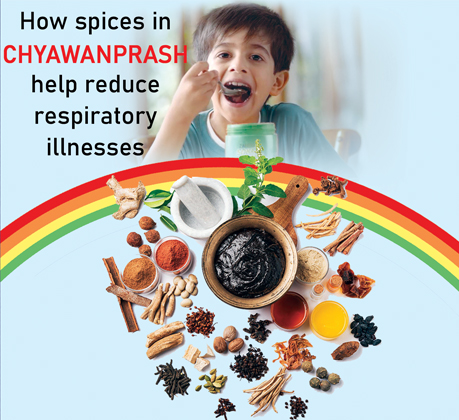

In Ayurveda practice, one of the most common conditions I see among young children is that of respiratory illnesses. With alarming levels of pollution and kids being more prone to allergies these days, young children often come in with
wheezing and breathing difficulties. One such case was that of a 13-year-old boy who has been suffering from Bronchial Asthma for 10 years. He had been on medication for a few years, but his parents wanted to try Ayurvedic remedies as well.
After Panchakarma treatments, I advised his parents to give him half a teaspoon of a well-known concoction twice a day, and within a month he was considerably better, with no episodes of wheezing. The child is now 15-years-old and has had
no episode of wheezing since the treatment, and the episodes of common cold have also considerably reduced.
All of us have heard of the lehyam (jam-like)
Chyawanprash, but most of us don’t quite know what it is. Chyawanprash is an Ayurvedic formulation made from more than 40 highly nutritious herbs and spices, which are also a great source of important minerals. The main ingredient of
Chyawanprash is Amla, which is the richest source of vitamin C in the world.
Preparing Chyawanprash isn’t an easy job, but it can be done at home with the right ingredients and recipe. Apart from Amla, there are about 40 other ingredients which make the lehyam, like Bilva, Amruta, Brihati and Draksha, to name a few.
The spices in Chyawanprash play a major role in helping people with their respiratory illnesses.
Nutrition Corner
The medicine I had advised was nothing but the well-known Chyawanprash. As a child, I too have benefitted from Chyawanprash. My grandfather used to give it to us on a daily basis, and I don’t recollect suffering from respiratory ailments
when I took it regularly. Only in my later years, when I stopped taking it, was I very prone to cold and cough, and developed breathing difficulties.
Spices in Chyawanprash
So, what are the main spices used in Chyawanprash and how do they help us? Here is a quick review.
Tugakshiri (Curcuma angustifolia) is one of the key spices in Chyawanprash. It belongs to the curcuma genus of plants, that contains species like turmeric. Tugakshiri is sweet in taste and cold in thermal property. The spice is indicated in
treating conditions of difficulty in breathing like Asthma, allergic rhinitis, and cough.
Tvak (Cinnamomum zeylanica) is nothing but cinnamon. We know it as an aromatic spice, but the pungent, bittertasting spice which is a hot thermal property also helps in reducing Kapha. It helps reduce cold and cough.
Padma keshara (Mesua ferrae) or the cobra saffron is a light spice which is astringent and bitter in taste, that helps control fever and nausea.
Patra (Cinnamomum tamala) or bayleaf is also used to make the Chyawanprash. It is a sharp, sweet-tasting spice which is hot in thermal property and helps get rid of a cold and also reduces Kapha.
Ela (Eletteria cardamomum), or elaichi as we commonly know it, is a pungent but sweet in taste spice which is cold in thermal property. It improves digestion, helps with difficulty in breathing and cough. Needless to say, it improves the
fragrance and taste of food too!
Pippali (Piper longum) or long pepper is a pungent-tasting spice which helps improve digestion, treat fever and conditions with difficulty in breathing. It is hot in thermal property and helps reduce Kapha, one of the major causes of
respiratory diseases.
While a daily dose of Chyawan prash, as recommended by a doctor or Ayurveda practitioner, is likely to keep all of us healthier, remember that the above spices can also be had in other forms to utilize their benefits.





Add Comment