



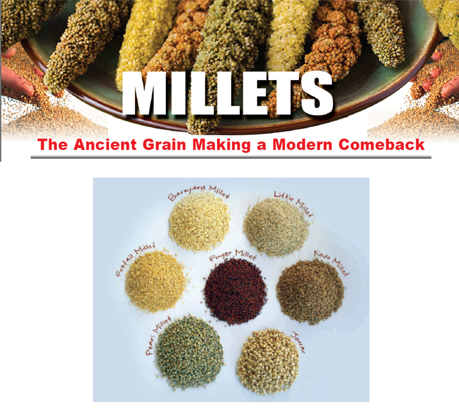

Millets are among the oldest cultivated grains in the world, grown for thousands of years across Africa and Southeast Asia. Today, they remain a vital staple crop for both humans and livestock, prized for their resilience, nutritional
value, and adaptability. Unlike other grains, millets are hardy and easy to store for long periods without damage from insects or spoilage, making them an essential part of traditional diets. In the U.S., varieties like pearl, finger,
proso, foxtail, and sorghum are now widely available, offering a range of flavors, textures, and health benefits. Millets are part of the grass family, alongside wheat, rice, and barley, and come in two broad categories: large (major) and
small (minor) millets. Large millets include pearl millet, sorghum, finger millet (ragi), foxtail, and proso millet, while small millets include little millet, barnyard millet, kodo, and browntop millet. Each type differs in size, color,
and taste, but all are nutrient-dense, providing a rich source of protein, fiber, vitamins, and minerals, making them an excellent choice for a balanced diet.
Health benefits of millet are extensive. Millets have a low glycemic index, which helps regulate blood sugar and can be particularly beneficial for individuals with type 2 diabetes. They are rich in dietary fiber, supporting digestive
health and gut microbiota. The soluble fiber found in millets can help reduce cholesterol levels, protecting heart health, while antioxidants such as tannins, phenols, and phytates support cellular health and may slow aging. Finger millet,
in particular, is high in B vitamins, including folate, which is essential for red blood cell production and overall cellular function.
Millets also supply vital nutrients such as iron, magnesium, phosphorus, potassium, niacin, and vitamin A. A quarter-cup serving of dry millet provides 5.5 grams of protein, 36.5 grams of carbohydrates, 4.25 grams of fiber, and minimal
sugar, making it a wholesome addition to any diet.
Cooking millet is versatile and easy. Whole grains can be boiled like rice or quinoa, while millet flour serves as a nutritious alternative to wheat flour in bread, waffles, and baked goods. Puffed millet can be enjoyed as a snack or added
to salads for extra crunch. Soaking or lightly toasting millet before cooking can enhance flavor, improve nutrient absorption, and bring out its natural nutty aroma.
From traditional porridges and stews to modern salads, risottos, and baked goods, millets are making a significant comeback in kitchens worldwide. Their combination of nutrition, versatility, and sustainability positions them as a powerful
ingredient for healthy eating in the 21st century, reconnecting us with a grain that has nourished humanity for millennia. Increasingly, chefs and health enthusiasts alike are exploring creative ways to incorporate these ancient grains into
contemporary diets, highlighting millets’ global appeal.





Add Comment