



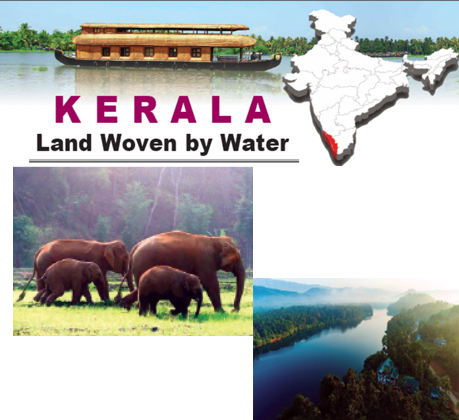

Kerala, the southernmost state of India, is a narrow stretch of land blessed-and defined-by water. Though small in size, it contains more than forty rivers along with their numerous
tributaries and branching channels. These waterways crisscross the landscape, shaping its geography, agriculture, culture, and the daily rhythm of life. Many of these
rivers are little more than seasonal streams that swell during the monsoon and shrink in the hotter months. Yet a few, like the Bharathapuzha and the Periyar, stand out for their size, significance,
and the role they play in sustaining the region.
Among them, the Periyar is the most remarkable. Rising in the densely forested Sivagiri hills of the Western Ghats, this 225-kilometre-long river flows westward
and empties into the Arabian Sea just north of Cochin. It remains navigable for nearly 160 kilometres from its mouth, a feature that historically made it an important
artery for trade, transport, and settlement in the region.
The Periyar’s story is also one of human ingenuity. In 1895, engineers accomplished an extraordinary feat for that era by constructing a dam in the Travancore
(Tiruvankur) mountains and carving a 1,766-metre tunnel through solid rock. This tunnel diverted the river eastward-a complete reversal of its natural flow-towards the
rain-shadow region of Tamil Nadu. After emerging from the tunnel, the Periyar travels through the Madurai district, where it joins the Vaigai River and
helps irrigate vast stretches of farmland. Before this diversion, much of the Periyar’s water simply drained into the sea.
The project not only transformed agriculture in Tamil Nadu but remains a landmark achievement in India’s engineering history.
Equally significant is the Periyar Wildlife Sanctuary, situated around the reservoir created by the dam. Today it is one of India’s most famous wildlife habitats.
Tourists from across the country and the world visit the sanctuary to glide through its waters in motorboats and watch elephants, gaurs, tigers, and bears descend to the
banks to drink and bathe. The surrounding forests have been carefully protected, allowing wildlife to thrive in a setting that feels both ancient and untouched.
Kerala’s rivers also hold deep cultural meaning, and none more so than the Pampa. Formed by streams rising in the hills of Kollam district, the Pampa stretches 144
kilometres and irrigates the fertile tracts of Kuttanad-often called the rice bowl of Kerala. Beyond agriculture, the river is woven into the cultural fabric of the region. Its
most celebrated moment comes during the annual Onam boat race, where long, sleek snake boatseach carrying more than a hundredpaddlers-slice through the river in
rhythmic unison. Entire communities gather on the banks to cheer them on, turning the event into a vibrant display of Kerala’s heritage, teamwork, and spirit.
From engineering marvels to wildlife havens, from agricultural lifelines to cultural celebrations, Kerala’s rivers are far more than geographical features. They are
the threads that hold together the land, its people, and its storiesflowing with history as much as with water.





Add Comment